Read This Before 2026: The Trends That Will Separate the Leaders from the Pack
As 2025 comes to an end, one shift is becoming unmistakably clear: marketing is no longer driven by platforms; it’s driven by behavior, and behavior is changing faster than ever. People want to feel smarter, more connected, more understood, and more inspired by the brands they allow into their lives.
2026 won’t simply reward innovation. It will reward brands that understand why consumers behave the way they do and how to create meaningful, human moments inside an AI-powered world.
At SparkShoppe, the next year will be one of the most transformative in a decade. Here are the six trends that will define it and how your brand can move confidently into the future.
1. AI Personalization Becomes the New Battleground
AI is no longer just a tool; it’s becoming the primary filter for how people experience content. In 2026, personalization will shift from broad targeting to behavior-driven prediction, not through invasive data collection but through the signals users intentionally provide to platforms.
Instead of relying on controversial inputs, companies are doubling down on first-party data. Email is becoming a significant new frontier of competition, with AI-powered segmentation now tailoring entire message flows based on purchase history, browsing behavior, engagement patterns, and declared interests. The same evolution is happening across social platforms and search, where personalization is increasingly shaped by how people interact with content rather than what happens in their private conversations.
Google continues to reward brands with structured content ecosystems and topic authority, while Meta is tuning its personalization to focus on meaningful engagement signals. The brands that will stand out are the ones that communicate intent clearly through consistent messaging, organized content, and a strong, authoritative presence.
2. “Search Everywhere” Redefines How Consumers Discover Brands
Search is no longer a single action; it’s happening across Google, TikTok, Instagram, Pinterest, YouTube, and AI assistants, often at the same time. Nearly 60% of Gen Z now uses TikTok as a primary search engine, while Pinterest search volume continues to surge for shopping inspiration. People compare results across platforms in seconds, pulling information from whichever channel feels most intuitive in the moment.
Picture a shopper researching your product: they might Google it first… then search TikTok for authentic reviews… check Instagram for UGC… and finally ask an AI assistant for side-by-side comparisons. Every platform plays a different role in the decision process.
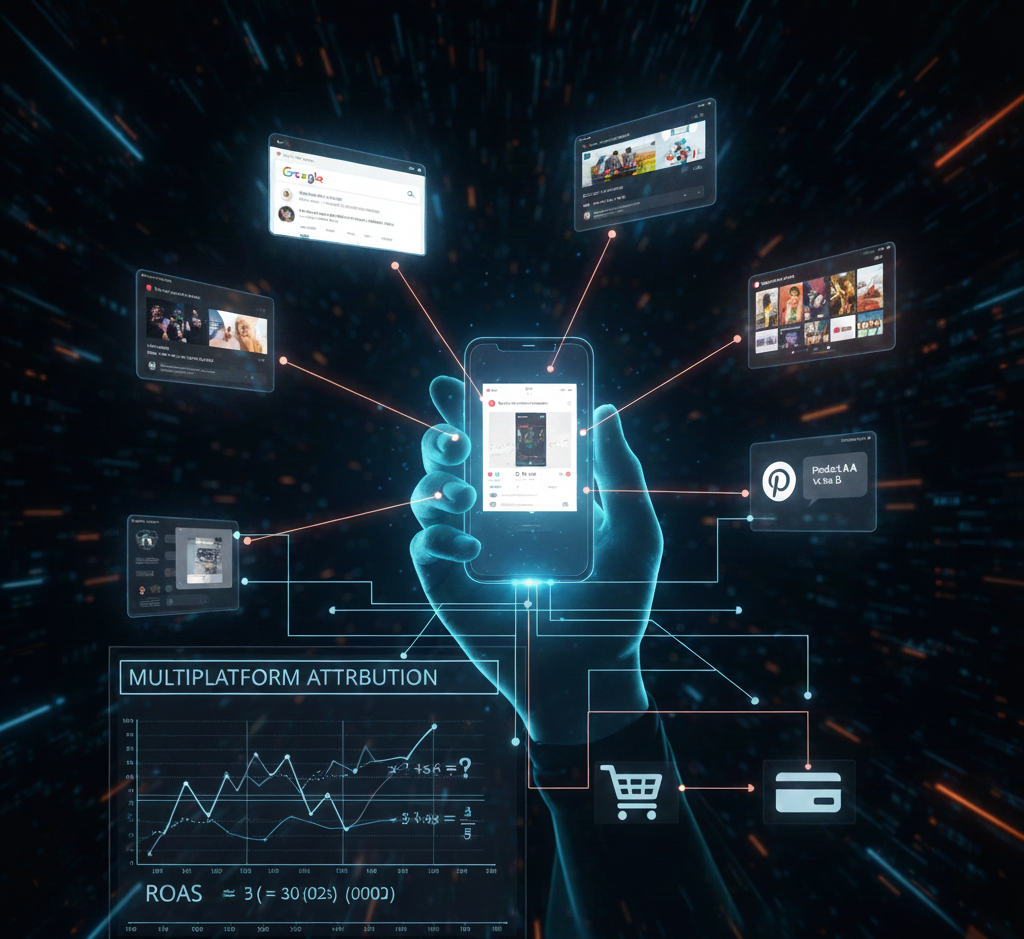
This fluid, multi-platform search journey creates a new challenge: attribution becomes more fragmented and more complex to measure. As users bounce between channels, it becomes increasingly difficult to calculate true ROAS (Return On Ad Spend) or attribute a single touchpoint to the conversion. Brands will need stronger multipoint attribution models and far more consistent content to stay discoverable across every step of the journey.
3. Wearables + AR Turn Everyday Life Into Immersive Storytelling
2026 will mark the shift from traditional filming to hands-free, in-the-moment content creation. Meta Ray-Bans are normalizing POV storytelling, while Apple’s spatial computing advancements are making AR (Augmented Reality) interactions smoother, more intuitive, and more widely accessible.
Instead of pulling out a phone, creators and customers will capture and share experiences directly through their glasses. At the same time, AR is moving beyond social platforms and becoming a built-in part of the shopping journey. Pinterest reports that AR try-on increases purchase confidence by up to 80%, and brands are now bringing these tools directly onto their websites to help customers preview products in real time.
Content isn’t just being recorded differently; it’s being experienced differently, with AR becoming a new layer in how consumers discover, test, and evaluate products.
4. Social Commerce Finally Hits Its Breakthrough Moment
For years, social commerce was “the next big thing.” In 2026, it becomes the thing.
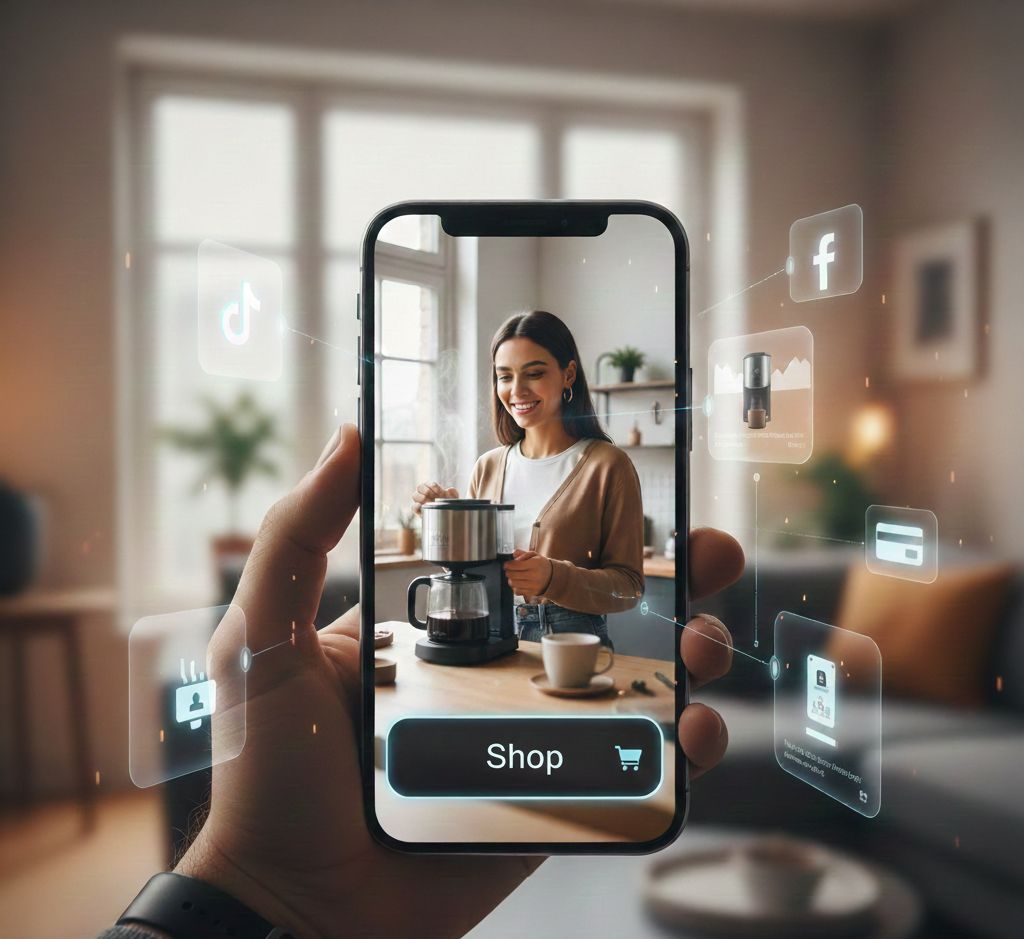
TikTok Shop surpassed $20B in GMV (Gross Merchandise Value), Meta continues to expand its integrated checkout, and AI-powered recommendations are shortening the path from discovery to purchase.
Consumers now expect to buy the moment inspiration strikes without switching apps, pages, or devices. A funny TikTok, a product demo, or a creator video can instantly convert a shopper. The brands winning in 2026 will be those who integrate commerce seamlessly into storytelling, not as a sales pitch but as part of the experience.
5. Video Evolves Into Adaptive, Multi-Format Storytelling
Video remains king, but the throne looks different every year. In 2026, the highest-performing brands won’t rely on one format. They’ll adapt to the moment.
A viewer may scroll past a 30-second video at lunch but watch a 3-minute how-to at night. They may engage with a carousel today, a live shopping stream tomorrow, and a quick POV clip on the weekend.
The future of video isn’t size, it’s structure. It’s understanding your audience’s attention in different mindsets and crafting stories that flex across formats.
6. Community Becomes the Ultimate Growth Engine
Algorithms shift constantly, but one truth remains: platforms reward content that sparks genuine conversation, not follower count. As social moves away from vanity metrics and toward real interaction, consumers are craving something deeper: connection, identity, and belonging.
Community-driven brands don’t just post content. They host experiences. They build rituals. They invite people into something that feels bigger than a product. Picture a weekly series viewers anticipate, live chats where customers show up for each other, or brand spaces where people feel represented and understood.
As platforms begin to phase out reliance on hashtags, discovery will increasingly come from engagement itself. In an AI-heavy world, community becomes your competitive edge, the human heartbeat technology can’t replicate.
Final Thoughts: 2026 Belongs to Brands Who Think Bigger
2026 won’t be shaped by the tools marketers use, but by the courage to reimagine how those tools bring people together. Brands that embrace AI ethically, build community intentionally, and create content that reflects real human behavior will lead the next era of digital marketing.
The future won’t wait, but you don’t need to navigate it alone. If your brand is ready to unlock what’s possible in 2026, SparkShoppe is prepared to build it with you.
Contact us today for your digital marketing needs. We’d love to help you grow.