The Checkout Challenge: Why Your Digital Strategy Must Now Win the AI Agent
Forget the long, winding sales funnel. The entire trajectory from "I'm feeling hungry" to "My groceries are on the way" is being compressed into a single, seamless, conversational command.
Welcome to the era of Agentic Commerce, where the key decision-maker in the e-commerce aisle is increasingly a sophisticated artificial intelligence.
We're seeing major retail players like
Albertsons launch advanced in-house AI agents that handle complex meal planning and shopping, while
Instacart embeds a fully transactional app directly into platforms like ChatGPT. This strategic pivot redefines the customer experience, installing a sophisticated algorithm as the primary agent responsible for executing transactions.
If your brand’s digital strategy isn’t optimized to be seen, understood, and trusted by these AI gatekeepers, you risk being left off the shopping list. Let's dive into how the grocery giants are changing the game, and what your brand needs to do right now to thrive in the AI shopping revolution.
Phase 1: The Inside Game—Why Albertsons Built Its Own Autonomous Shopper
Traditional e-commerce is a high-effort game. You have to scroll through endless lists, cross-check ingredients, and repeat your standard order every week. Albertsons, one of the nation’s largest grocers, decided that was too much drudgery for their customers. Their solution? An agentic AI shopping assistant that lives right on their site and their other affiliated U.S. brands.
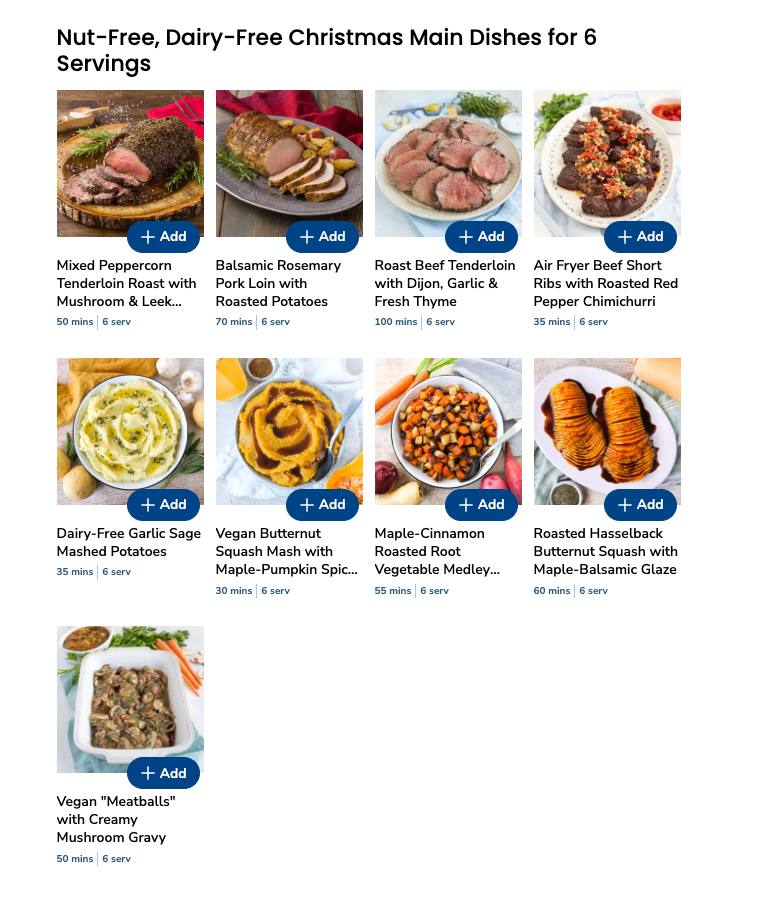
An agentic AI is far more than a simple chatbot; it's a sophisticated program designed to achieve goals autonomously. Instead of asking it for a recipe, you give it a complicated task like: "Plan a Christmas dinner for 10. Two guests have a nut allergy and one has a dairy allergy."
Albertsons’ agent doesn’t just spit out a list; it holds an "intelligent two-way conversation," finds suitable recipes, adds the calculated, precise ingredients to the cart, and even remembers those dietary constraints when you ask for dessert.


This is a masterclass in retaining customer loyalty and data. By keeping the agent within their own platform, Albertsons controls the entire experience. For retailers, building an owned agent creates a powerful new avenue for pushing high-margin products.
Phase 2: The Platform Play—Instacart Moves into ChatGPT
While Albertsons built an in-house system, Instacart chose collaboration, embedding their full, end-to-end shopping experience directly within ChatGPT.
This partnership is arguably the bigger shockwave for digital marketers. Instacart isn’t just using OpenAI’s models for better recommendations; they launched a full, transactional app that lets users go from conversational inspiration to purchase in one full swoop.
Consider a user starting a conversation in ChatGPT with the request: “I need a healthy meal plan for my toddler this week.” The AI, leveraging Instacart’s platform, can surface meal ideas and then prompt, “Would you like me to add the ingredients to your cart?” The user can then
complete the secure payment using Instant Checkout without ever leaving the chat window.
This signals the evolution of the traditional e-commerce journey. The path from "intent" to "purchase" has accelerated, collapsing into a single, seamless conversation. Your brand’s digital storefront is no longer a website; it’s an AI platform. Brands must now compete for the attention of the agent, not the shopper, because the agent is now the gatekeeper to the purchase.
The $385 Billion Question: Is Your Brand AI-Ready?
This shift is enormous. Agentic shoppers are poised to capture between 10% and 20% of U.S. e-commerce spending by 2030, translating to up to $385 billion in sales, with the grocery and Consumer Packaged Goods (CPG) sectors leading the charge, according to Morgan Stanley Research.
So, how do you win when your target audience is an algorithm? You need a whole new playbook:
- Stop Thinking SEO, Start Mastering GXO: Traditional Generative Engine Optimization (GEO) helps AI find your website. You now need Generative Experience Optimization (GXO). GXO is the strategic umbrella that focuses on optimizing your entire brand interaction within AI ecosystems. This means cleaning, structuring, and enriching your product catalog data so that the AI agents—which prioritize trust and accuracy—can easily understand, verify, and select your products. If your product metadata is vague, the agent will skip it.
- Focus on Data Hygiene (It’s the New Ad Spend): AI agents, particularly those making dietary or allergen-based decisions, rely on impeccable SKU-level data (nutrition facts, ingredients, certifications). Investing in data standardization and cleanliness is now a non-negotiable step to ensuring AI agents trust and recommend your product.
- Integrate Paid Media with Agent Logic: As AI platforms become commerce destinations, your advertising strategy must evolve. Promotions and couponing need to be instantly readable and actionable by the agent. If the AI is building the cart, your ad needs to influence the initial prompt or the agent’s selection criteria directly, blurring the line between promotion and direct transaction.
The move by Albertsons and Instacart shows that Agentic Commerce isn't a futuristic concept—it's here, and it's already restructuring how $385 billion flows through the digital economy.
At SparkShoppe, we are always looking for new trends and groundbreaking strategies to ensure your brand remains visible. Ready to conquer this new AI frontier and make sure your brand is the AI agent's first choice? Contact us today to ignite your strategy!